PortfolioOffice
Portfolio Office / Studio

A working studio
that also teaches.

The Portfolio Office is not a test-prep company with an art department. It is a practice first. Students work in the same room, on the same terms, and against the same standard as the studio's own projects.
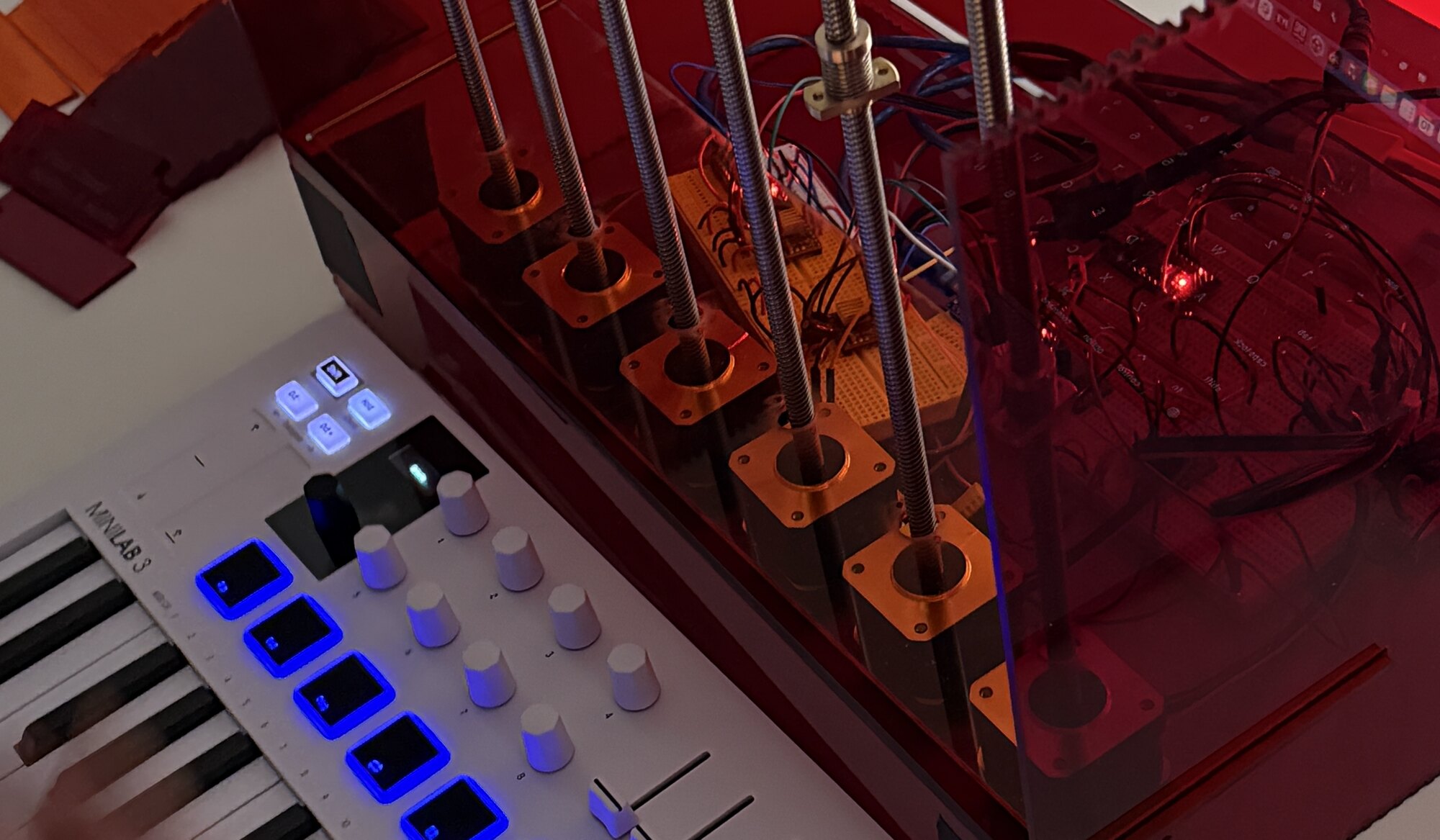
A studio bench: a red acrylic machine driven by stepper motors and threaded rods, wired to a microcontroller, with a hand playing a MIDI keyboard beside it
01 / Position

What I believe about portfolios.

Four convictions shape every engagement. They are not neutral, and they will not suit everyone. That is intentional.

01

Style cannot be taught. Rigour can.

I will never hand you a template look. I will hold you to a standard of research, iteration, and finish that most applicants never reach.

02

The edit is the work.

Deciding what not to show is the single highest-leverage act in a portfolio, and the one students resist most.

03

Honesty beats optimism.

If your list is unrealistic or your timeline is too short, I say so at the consultation, before anyone signs anything.

04

Small by design.

A capped number of students per cycle. Growth beyond that would change what the studio is, so it does not happen.

02 / Faculty

Who you will actually work with.

One instructor, and a small group of collaborators brought in for defined pieces of work.
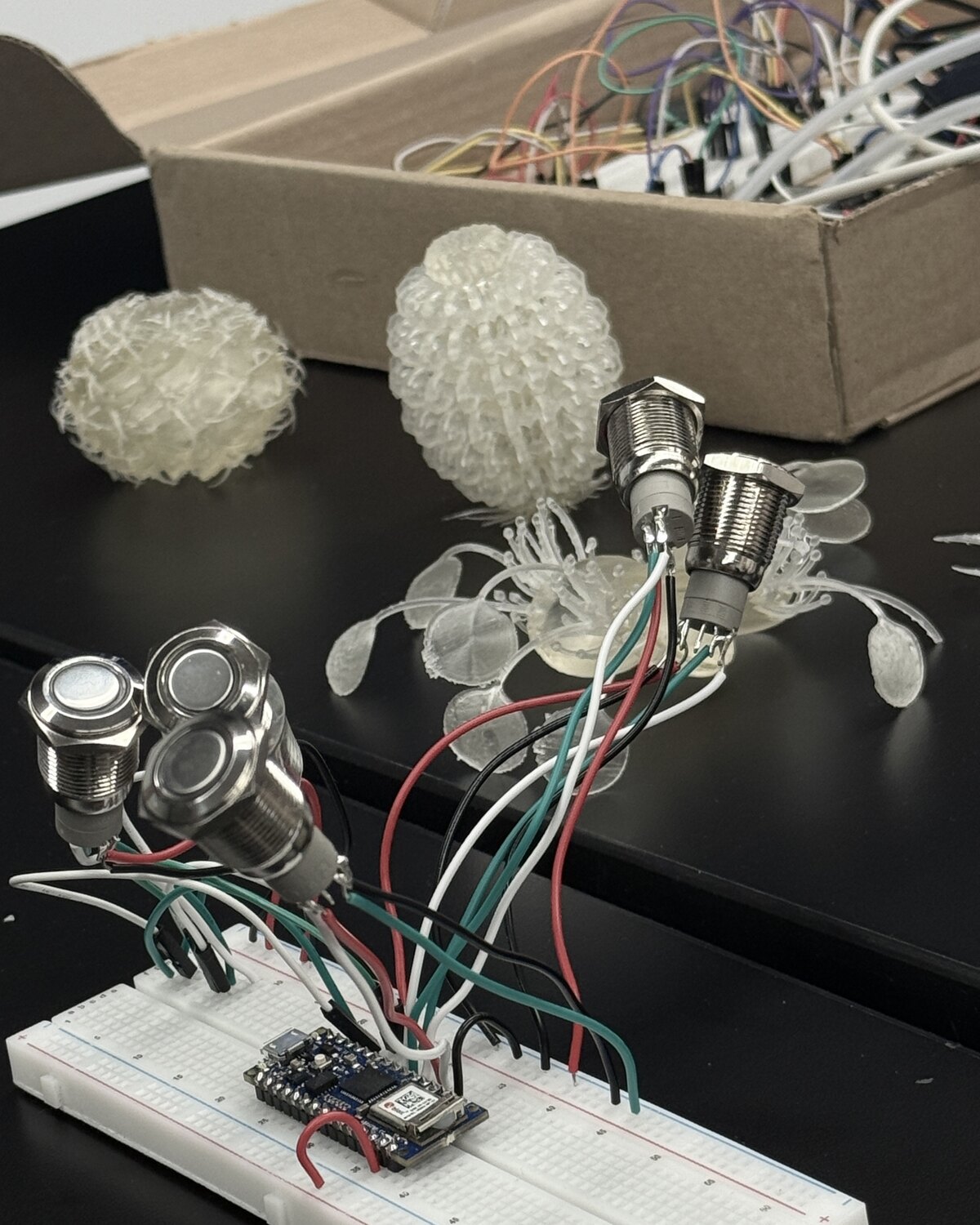
A workbench with 3D-printed translucent forms, arcade buttons and a wired breadboard
Founder & lead instructor

Moira Zhang

I work in AI cinematic and generative interaction, out of a studio in New York making film-grade AI imagery. The work is closer to engineering than to fine art — depth capture, generative sound, real-time systems, production pipelines. That is not a side interest I picked up to teach it — it is the work I do commercially, and it is why the AI module here teaches a real production pipeline rather than a tour of tools.

Foundation at RMIT, BA in Graphic and Media at UAL, MRes in Communication Design at the RCA, and an MS in Integrated Design & Media at NYU Tandon — an engineering school, not an art one. Four institutions across Australia, the UK, and the United States. I have sat in the studios and crit rooms of all three systems as a student, which is a different kind of knowledge from having read about them. The RCA degree was research-led; a paper from that period was published at NIME.

I lead every engagement myself, from the first session to submission, and there is no shared cohort. I write the statements with you rather than handing that off — from the first brainstorm through the final draft — because the essay and the portfolio have to be making the same argument. Two parts of the work are run by other people, and both are set out below: neither is a junior tutor, and you are told which is which before you sign.

Education
MS Integrated Design & Media, NYU Tandon · MRes Communication Design, RCA · BA Graphic and Media, UAL · Foundation, RMIT
Practice
AI cinematic and generative interaction, New York
Teaches
Interaction and computational media (HCI, creative technology, interdisciplinary) · graphic and visual communication · the STEM-designated end of art and design
Published
NIME — New Interfaces for Musical Expression
Student offers
Royal College of Art ×2 · Columbia · NYU Tisch · King’s College London
03 / Collaborators

Who else is involved, and where.

Four defined pieces of work, each done by someone who does it full time. None of them is a junior tutor.

Some parts of an engagement are better done by someone who does that one thing every day. Those parts are contracted out, deliberately and narrowly, and you are told which they are before you sign.

What stays with me: the direction of the portfolio, what gets made and in what order, the writing, the school list, and the decision about when the work is finished. Those do not move, in any package, at any price.

Collaborators are not listed by name because they work under their own studios and are engaged per project. You will meet whoever is involved in your work before they start on it, and you can ask for their background at the consultation.

01

Portfolio critique

Run by an instructor trained at Parsons and NYU, with a second reviewer who teaches at NYU brought in at the points where the set has to hold together. I set the direction of the work and decide what gets made; the critique itself — piece by piece, and then the set as a whole — is theirs. It is the arrangement art schools use, where the person who sets the brief is not the only person who reads the result.

02

A second read on every essay

Three readers see every statement before it is submitted — two Cornell graduates and one from UBC and NYU. I still write it with you from the first brainstorm to the final draft; they are the outside eye on whether the argument lands for someone who has never met you.

03

Film and production

A working New York crew for camera, lighting and post, brought in when a moving-image project needs production values a studio bench cannot give it. They do not teach.

04

Studio placement, New York

The partner studio that hosts the project training block and issues the certificate. Students work to that studio’s brief and standard, which is the point of the placement.

04 / Terms

How an engagement actually runs.

Agreement first

Scope, session count, deliverables, and instalment schedule are set out in a signed agreement before the first session.

Instalment payment

Fees are split across the engagement rather than paid up front, so both sides stay accountable to the schedule.

Your work stays yours

You hold copyright in everything you make. I ask separately, in writing, before showing any student work publicly.

Come and see
the studio.

Consultations are free and unhurried. In person in New York, or online wherever you are.