1 · The question under the question
The question is never really “can my child use AI.” It is “will using it get them rejected, and will not using it leave them behind.” Both halves are asked in the same breath, which is why the answer usually disappoints: it depends entirely on what the work is for.
A committee is not running your images through a detector. It is doing something harder to game. It is asking what decisions you made, and whether you could defend them in a room. That question is indifferent to which tool produced the pixels.
2 · Production is not an argument
There are two ways AI shows up in an applicant portfolio, and they are not close to equivalent.
The first is production. The student had an idea, could not execute it, and generated the execution. The output is competent and completely mute. It says nothing about the person, because no decision in it was theirs except the prompt, and a committee reading a hundred portfolios that week has seen that prompt before.
The second is position. The student is making work about something the technology does — how it fabricates authority, how it flattens a place it has never been, how convincing a lie becomes once it is well typeset. Here the tool is the subject. Remove it and the project collapses, which is the test.
If the project would survive being made another way, AI was production. If it would not, AI was the argument.
3 · Two portfolios that used it
Both of these are on this site, and both students had offers.
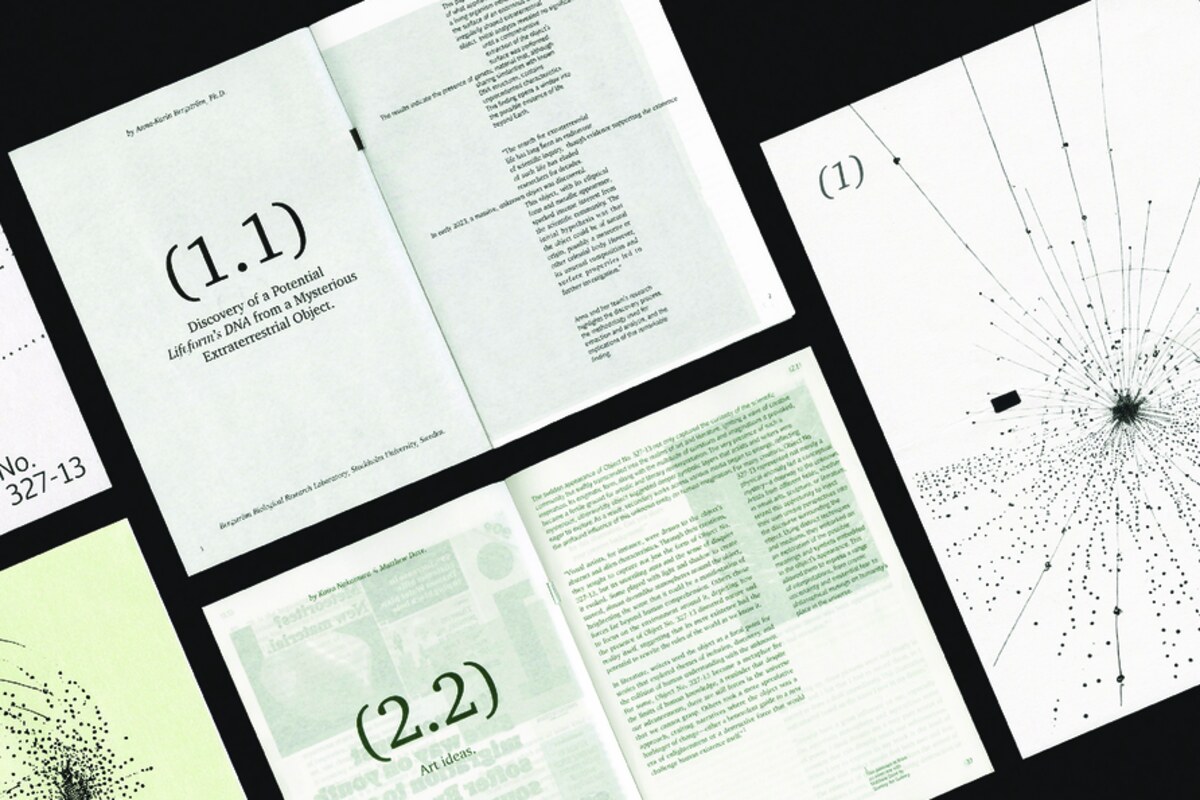
Object No.327-13 is a book generated end to end by AI: a scientific report on an alien artefact, complete with figures, citations and the particular deadening cadence of institutional writing. It is a satire of anthropocentrism, and it works precisely because the machine is fluent and empty in exactly the way the argument needs. A human writing it as pastiche would have been trying too hard.
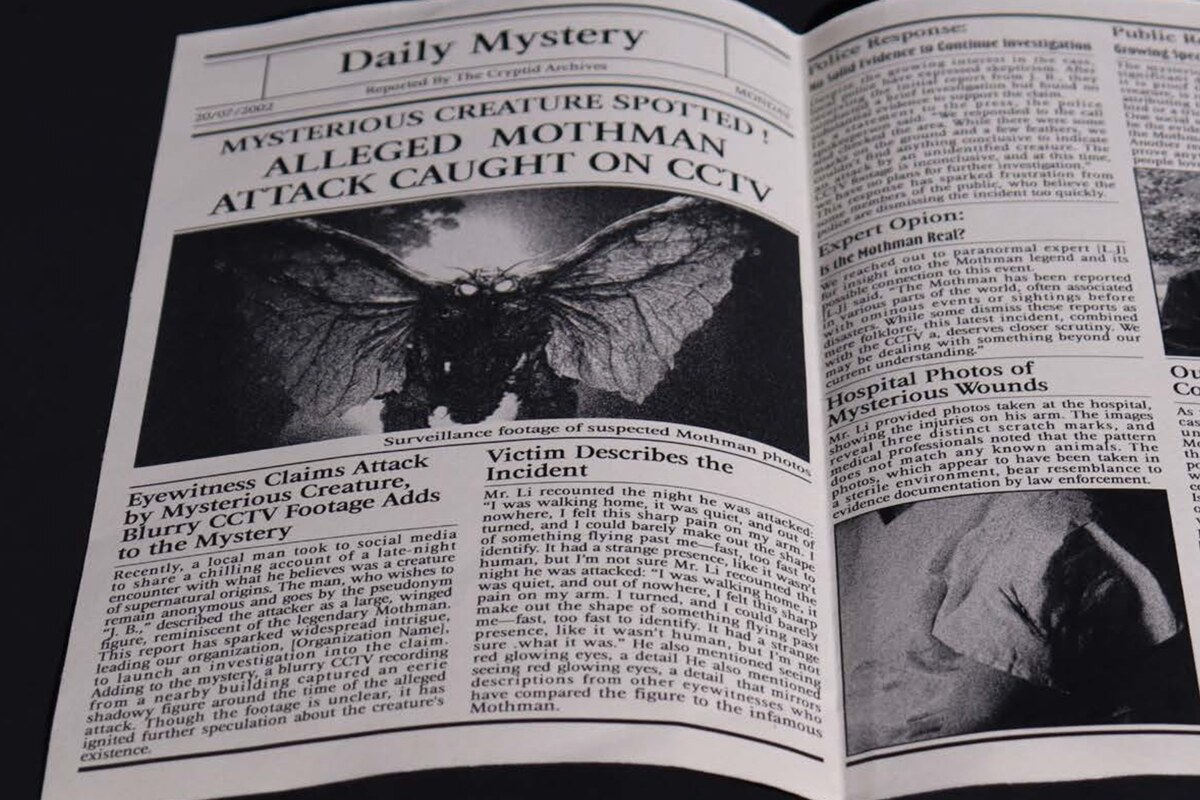
The Mothman combines generated imagery, 3D and live action into a mockumentary, then prints it as a broadsheet. The subject is how authority is constructed — why a thing becomes believable once it has been documented, set in columns and given a dateline. Generated footage is the correct material for that, because the project is about the manufacture of evidence.
Neither student used AI to make their portfolio faster. Both used it to say something they could not have said otherwise, and both could explain that in an interview in one sentence. That sentence is the whole thing.
4 · Say so
Disclose it. In the project description, in the same plain register you would use for “screenprint” or “cast plaster.” Name the tools and name what you did with them.
Schools are still writing their policies and they are not writing them at the same speed, so check the requirements for every programme on your list rather than assuming a rule carries across. But the general principle holds regardless of what any particular policy says: undisclosed use reads as concealment the moment it is noticed, and it will be noticed by someone who looks at this work all day. Disclosed use reads as method.
The applicants who get into trouble are almost never the ones who used the tool. They are the ones who could not say what they used it for.
5 · When not to
Most of the time. If you are applying to a programme that is going to spend a year teaching you to see — drawing, material, the slow observational work — then a portfolio full of generated images is answering a question nobody asked. The foundation still has to be there, and it has to be yours.
I work in AI imagery commercially and I still tell roughly half the students who raise it to leave it out of this cycle. Not because it is dangerous, but because they wanted it for the wrong reason: to cover a gap rather than to make a point. A committee can tell the difference, and so can you, if you ask yourself the one question above.
Start there this week. Take the project you are most tempted to generate, and write one sentence explaining why it has to be made that way. If the sentence is hard to write, make it another way.
Moira Zhang runs The Portfolio Office and works in AI cinematic and generative interaction in New York.